Live fleet list
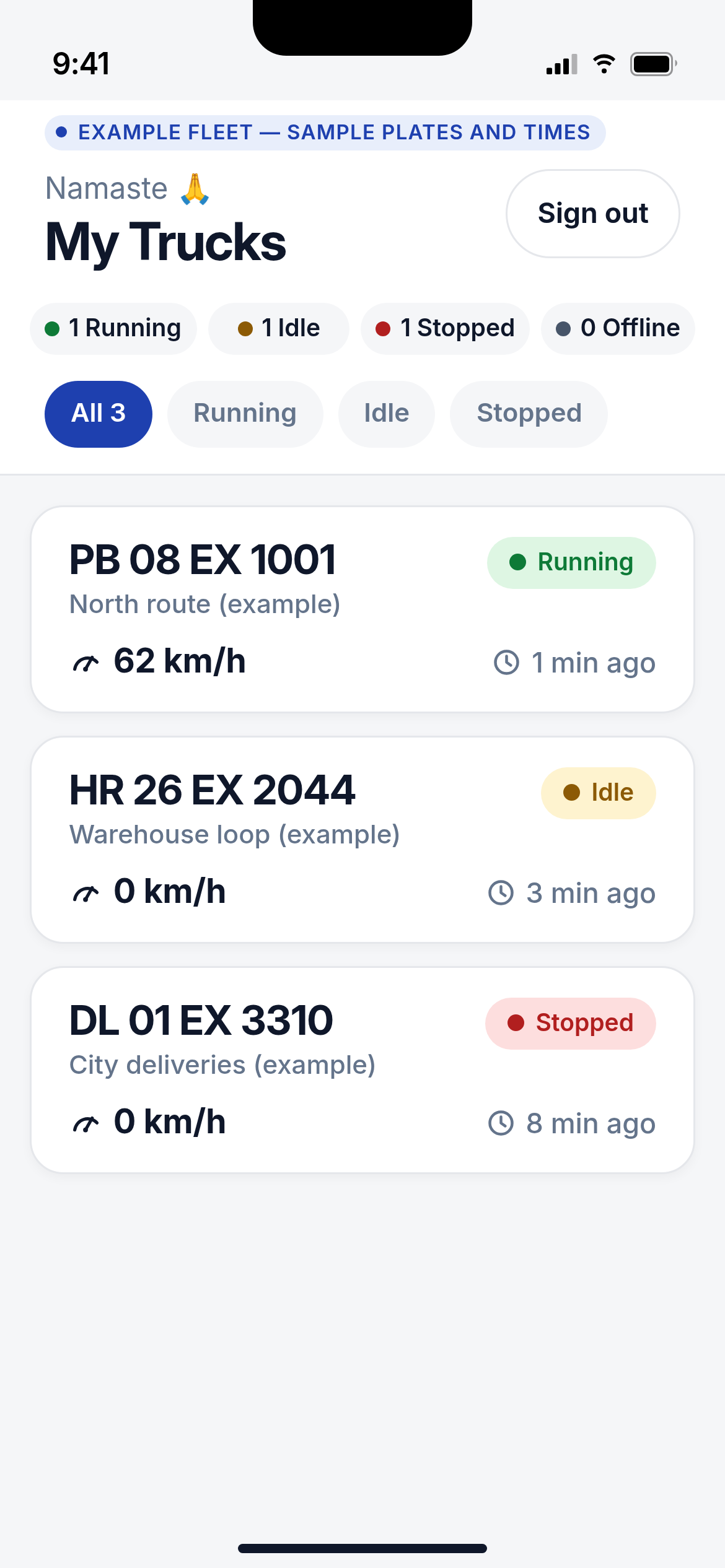
Home shows truck cards with plate, label, speed, and a relative timestamp. Summary counts and filters sit above the list.
Running
Idle
Stopped
Offline
Go · React Native · PostgreSQL
A senior-friendly fleet-tracking app for a father with a 1–5 truck operation running Pictor PS10a and PT06 GPS trackers.
github.com/Rhythm1710/Truck-TrackerPictor trackers send location frames over a cellular link to a single Go binary. The server listens on TCP port 5023, writes positions to PostgreSQL, and exposes REST plus a WebSocket on port 8080 for the app.
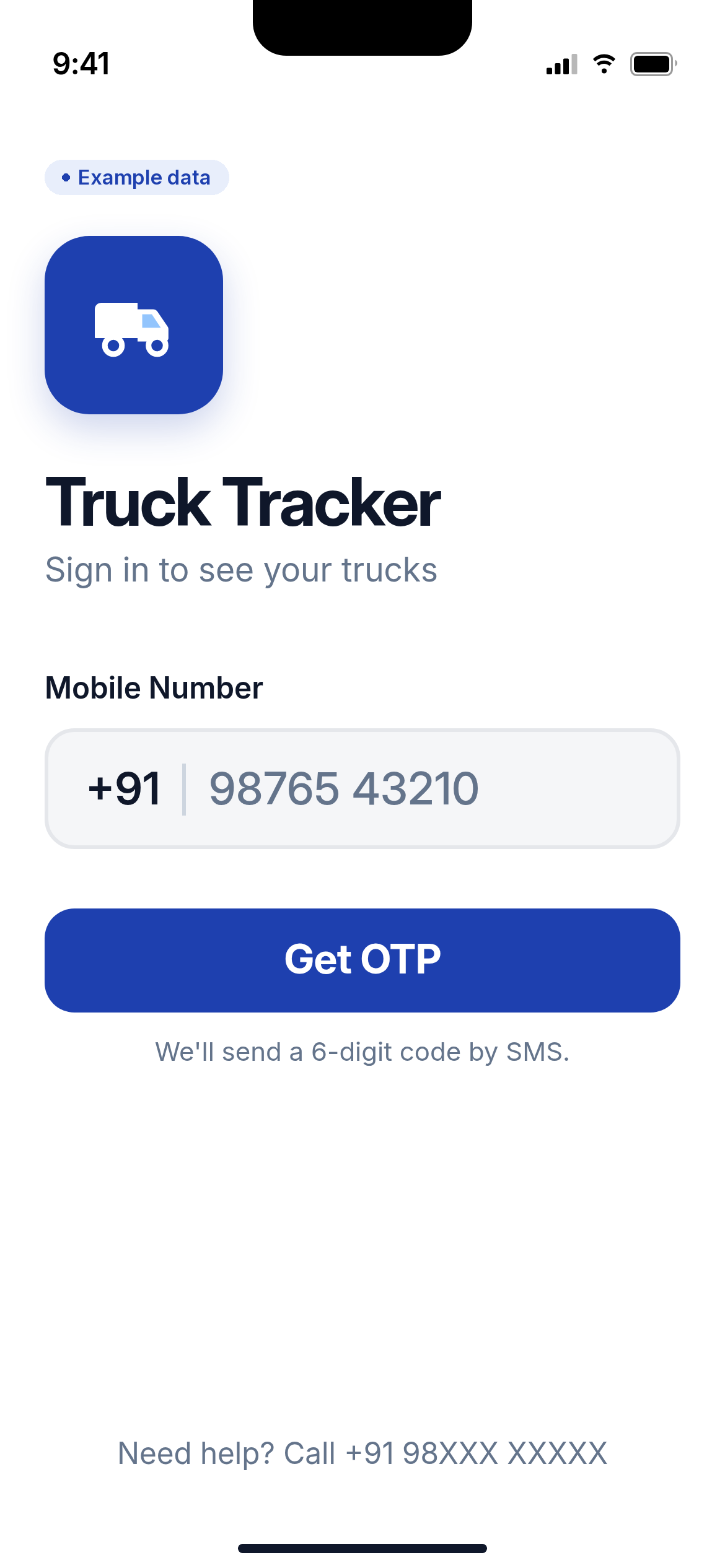
The React Native app — iOS and Android from one TypeScript codebase — signs the operator in with a phone number, lists every truck with a live status pill, and opens a detail screen with a Mappls map, ignition, speed, heading, and last update. The interface is English, high contrast, large type, and only three screens: Login, Home, and Truck Detail.
Taken from the current app and backend in the repository — not a roadmap.
Home shows truck cards with plate, label, speed, and a relative timestamp. Summary counts and filters sit above the list.
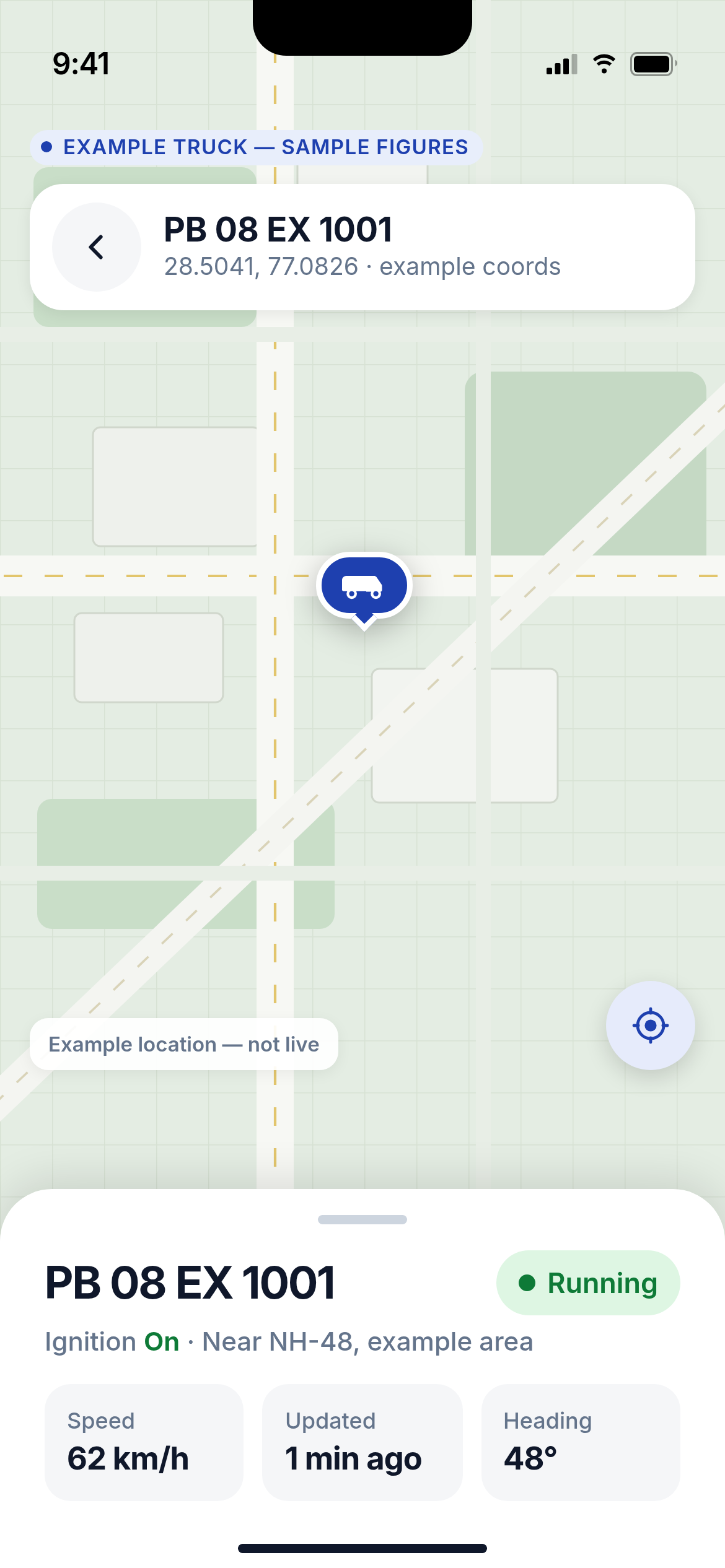
A Mappls map with a bottom sheet for ignition, speed, heading, and last update. If Mappls keys are missing, the map falls back to a placeholder.
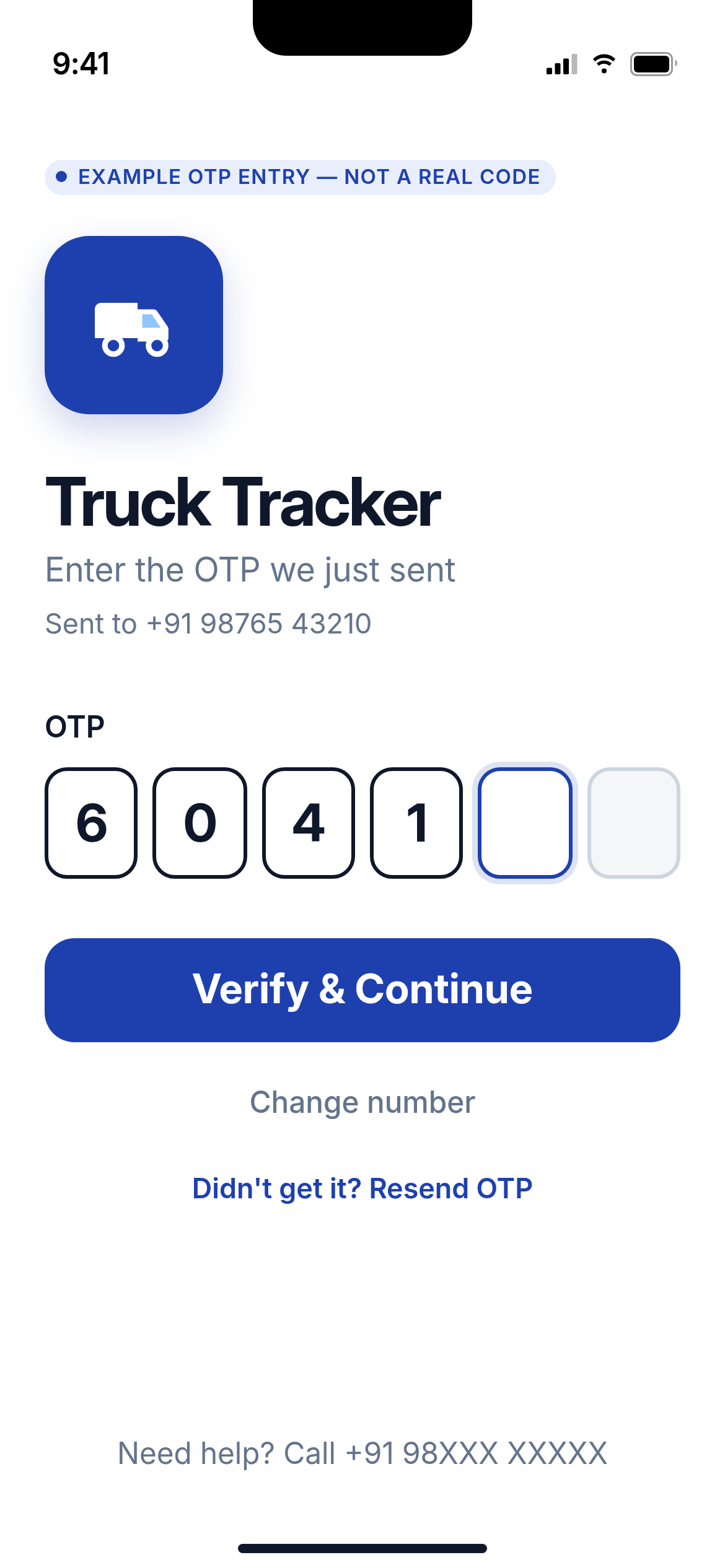
Firebase Phone Auth sends a 6-digit OTP. The backend exchanges the Firebase ID token for a 24-hour app token. A still-valid session is restored from the device so Home opens directly.
One socket to /v1/live patches incoming positions into the
app cache. It reconnects with exponential backoff, caps at 30 seconds,
and closes while the app is in the background.
The server decodes Pictor PS10A and PT06 frames that share the same envelope. CRC-ITU is checked against the vendor’s golden frames. A fake tracker can replay login, heartbeat, and location frames without hardware.
Designed for a parent who is not a regular phone-app user: large tap targets, a short screen path, and no dispatcher console or multi-tenant dashboard in this version.
From the project README. Three goroutine-based services share one process, one Postgres database, and an in-process position bus on Go channels.
:5023:8080Approved Login, OTP, Home, and Truck Detail layouts. The banners, plates, times, and map coordinates are example data from the design files — not live telemetry, and these images are not committed in the GitHub repository.
Libraries and services actually used in the repository.